Showing posts with label In the Crossfire of Revenge. Show all posts

Thursday, September 10, 2020

Save The Girls


What started out as a character-study of Sean McGee (the main dude in all of my political crime novels) turned into a novel... Why am I not surprised? I should've known better. He and Sport always take over my narrative. They're very strong characters and often surprise me, as Sean did in this book.


I wanted to explain what in his past had turned him into this noble and protective hero. I started with his enlisting in the Marine Corp, which led to his becoming Recon. He met Randy, Dan, and Craig in Recon. Dan was introduced in Counterpart just long enough to identify his body. In Save the girls, you get to meet him. These four young men go from boot-camp to special forces with the same intensity they pursue their respective careers in Secret Service and as a private bodyguard.


Sean decides to be become a Sacramento City Policeman. He loves it. He loves his training officer, Warrick. Remember that name? Janet Warrick--aka Sport... the woman who starts the series in Counterpart? This is her father.


Sean comes across the his first organized crime in his city--but the criminal lives outside of his jurisdiction. A prostitution ring run by a Russian named Boris. Sean doesn't like it. Boris can easily leave the city limits to the sprawling Greater Sacramento area and Sean can't follow. You all know Sean well enough to know that's not going to work for him. So he meets a guy named Becker (I won't spoil it for you if you haven't read Counterpart, but this is where he meets Sean).


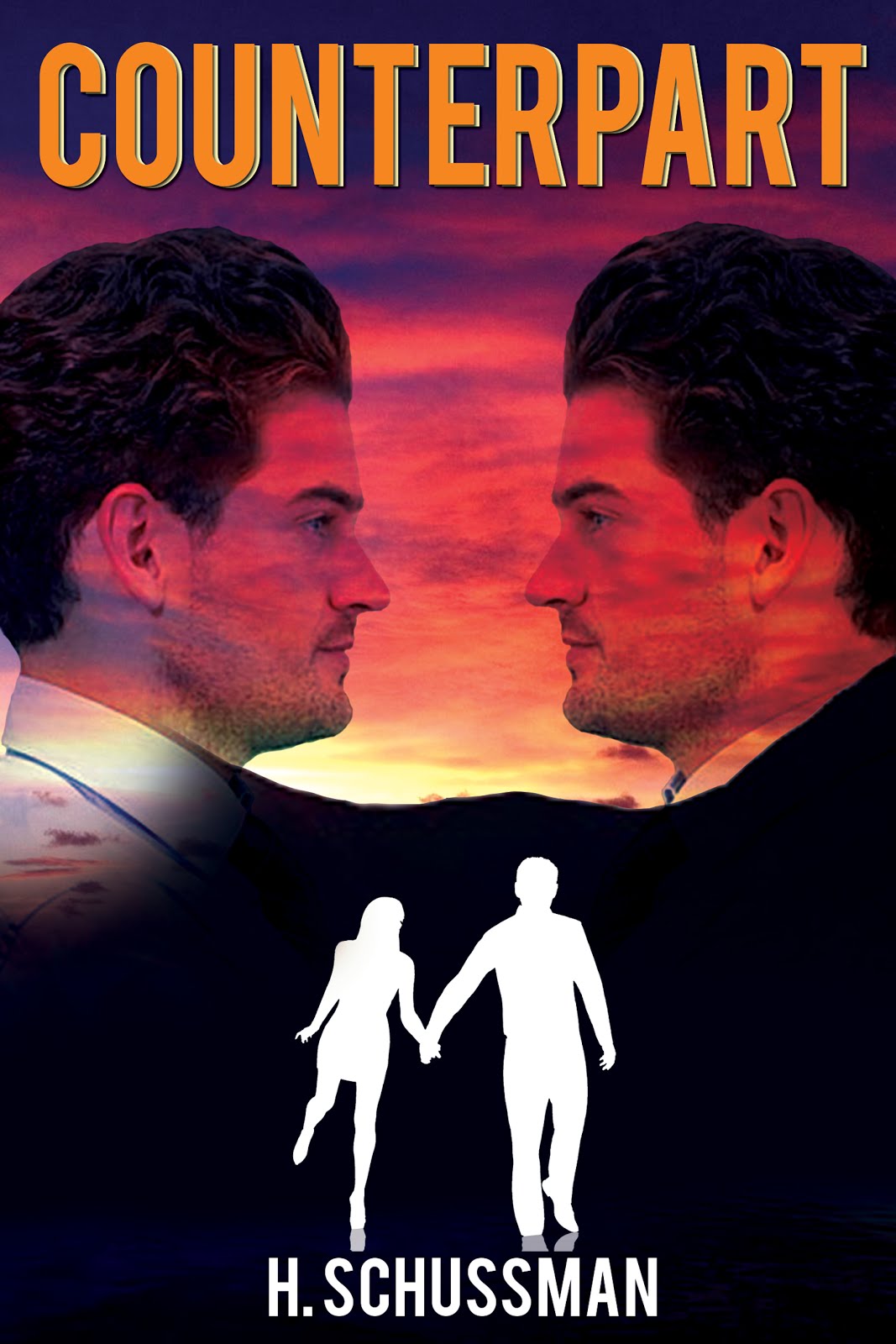
Sean joins the CIA. No more city limits. He goes after Boris by stealing a prostitute. Boris is pissed. Sean is giddy with joy. He steals another one, this time a teen named Jazzy who looks just like the girl on the cover. Now Sean's obsession begins to shift from destroying Boris to saving the girls.

For paperback I'll send you over to Amazon.

Ebooks are available for any reader anywhere. An easy way to get it is through Smashwords.

Sunday, May 19, 2019

EBook, Paperback, Book Cover Questions


How do you publish to so many eBook sites? How did you make your book into a paperback? How do you design a book cover? (I've answered the book cover question in more detail on a previous blog post) I've been asked this by so many people, I don't know who to attribute the question to :)
There’s basically two ways to get your book fully distributed. You can either go to each and every eBook website and download your document file to their library, or just download the document to Smashwords.com. I’m not getting paid by them to write this, but seriously Smashwords is by far the most comprehensive approach. That’s not to say it’s easy. The document must be prepared per their standards… stripped completely clean of any possible corruption. Fortunately, a step-by-step book is free at their website to ensure you can do it properly. Smashwords then takes your perfectly formatted Microsoft Word 97-2003 ‘doc’ (not docx) and formats it for all e-reader devices (each device is different). Believe it or not this is a free service up front. As the sales come in, then they get a portion of the profit. I tried a Fiverr formatter but the guy couldn’t do it right and I ended up doing it myself. Don’t be suckered into their re-assurances that they can do it. Make sure they can, and tell them you won’t pay them if Smashwords doesn’t place you in the premium catalogue.
I’m going to say it again because it’s that important. Follow the Smashwords guidelines exactly. It will probably take you a couple of days. BUT, if you do it right, you will be in their premium catalogue with maximum distribution.


There is only one place who doesn’t accept Smashwords. Can you guess who? Yep, Amazon! When you complete your work at Smashwords, you have to go over to Amazon and follow their instructions. Another couple of days to figure it out. But while you are at Amazon, check out the paperback option at KDP. You have to go to “Author Central” to publish paperback. The great news is they also don’t charge you for the process (which is good because you’re the one doing all the work). They will pay you a percentage. You can choose your price and it calculates your royalty. In the old days, when you had a book made into paperback, you had to purchase cases of books and pile them up in the spare room. Now it’s print on demand. When someone buys your book on Amazon, KDP prints it and then ships it directly to the reader.
Now let’s back up to the question of how to make a book cover. This actually needs to be done before you publish on any site. The easiest way is to go to Fiverr and choose from the hundreds of designers. It’s super cheap (less than $50 usually). At that point bundle your needs for eBook cover, paperback cover, and audio book cover. When you get your cover back you can then publish at Smashwords, Amazon eBook and Amazon paperback.
In my next post I’ll discuss how I got an audio book made…

Thursday, May 9, 2019

Guest Post: K. Bartow


Jim Foster (narrator for Audible) asked, "What drew you to writing? What did you hope to accomplish?"

K. Bartow helped me out by answering this question. Thanks Karina for taking the time to give such a thoughtful and inspiring answer.

Like most children, I skipped around from one idea to another with regard to what I wanted to be when I grew up. I went through the usual choices—ballerina, teacher, and carpenter, my dad’s occupation. As I matured, though, I realized my having Cerebral Palsy would impede my success in all of those fields and many others.

When I was nine, my mom took me to meet a children’s book author at our local library. I listened to her speak and could sense her passion for it, sparking something in me. In the days that followed, I pondered it further and discovered I could do that. I was already a gifted student, especially in English class, and even with only one usable hand, I knew I’d make it happen. 

Once again, however, age made me reconsider my aspirations. As I neared adulthood, I resisted doing something “just because” it was almost the only job I could physically do. I didn’t commit to it upon graduating high school, wanting to investigate other options. In the end, my creativity plagued me and pushed me to put the pen to paper—or nowadays, the keyboard to the word processor.

I didn’t have true objectives starting out, other than having a career and being allowed to use my active imagination every day. Sure, I wanted to create works that publishers and readers alike would enjoy, but that concept eluded me for quite a while. Overall, I guess my main goal was to get to know myself and any talent I may have.

Once I began, I saw everything the craft could give me. I could create a whole world and take charge of every twist and turn and outcome, without there being rights or wrongs. I could use the experiences that had hurt me and state the way they affected me or how I wished I could’ve handled them. Regardless of whether anybody would ever read my words or not, it was a therapeutic release and gave me a freedom I had never known before.

Thus, what started as a sort of “career of convenience” has become a lifestyle I truly cherish.
To connect with Karina visit her at:

Website 

Wednesday, April 10, 2019

Guest Post: K.S. Mitchell


This is an opportunity for readers to ask questions about our craft. Thanks fellow authors for helping me out! I know you are busy.

Musti asked: Do you pay someone to proofread your work?

Children and YA author, Kimberly Mitchell, responded to this question.
The short answer is no. I've always partnered with other writers in a critique group while I develop my books. Once I hit the stage where the book is ready for beta reading, I ask a few friends. My twin sister has been one of my best beta readers as well. During this process, most of the proofreading gets done. Then I'll do a final version before I send the book out and focus closely on grammar and sentence structure instead of the plot line, trusting that the earlier edits have ironed out the story.

However, I did hire a sensitivity reader to read through a middle grade novel that contains diverse characters. Since one of the characters is black, and I'm not, I wanted to be sure I wasn't falling into stereotypes or presenting the character in any way that might be offensive. I found the reader's feedback valuable and I was able to revise the character accordingly.

If I were to self-publish a book in the future instead of pursuing the more traditional route as I am now, I would definitely hire an editor before I released the book.

Sunday, March 10, 2019

How Do You Design a Book Cover?


My friend, John, asked me, “How do you design a book cover?”
Finally a technical question! There’s several different ways to go about it. I designed my first book on the Windows Art program. Honestly, it’s my favorite cover. Unfortunately I had to cave into business pressure and go with a photograph based cover… mainly because my second book had a photo cover.
Speaking of that, my publisher of El Tiburon was amazingly cool to have given me a great book cover. I’ll admit I asked them to stay with my design style, but no. So I had to approve their design, which meant saying no to several models because they didn’t look right.
Eventually I asked them to remove the models from the cover because it looked like a steamy romance (after about two years and multiple complaints from readers that the cover was misleading). Don’t get me wrong… El Tiburon has its romance, but steamy doesn’t quite fit the bill.
My first experience with making a professional quality cover was through a friend who used a Fiverr tech. We made Counterpart’s new cover. Again, I only had yay or nay power. I wanted to have control from the beginning.
For my recently published book, In the Crossfire of Revenge, I contracted with Fiverr all by myself. I felt so grown-up! :) I chose from their long list of book cover specialists based on reviews. I wanted one who allowed for multiple revisions. My lady was in Germany. We dialogued back and forth about how I wanted the cover to look. I was directed to an enormous photo bank to choose the photo I wanted (it took me about a week to decide). Then I sent it to her and she went to work. It took about six revisions until I was satisfied. I love the results… and it only cost me about $45 bucks! She gave me a cover in 3D, a thumbnail for eBook sites, and a square one for the audiobook, and the cover for the paperback.
Then I learned how to make it animated with glittering light using Glitterboo. I think it looks pretty cool on the cover I made for the McGee Series. That one I did using the phone app called Canva. My nephew took an artistic photo of his police gear for me to use. Canva is a great app.


Wednesday, January 16, 2019

How do you start a book?


Lynn Takacs asked this question, via Facebook, regarding a photo of me holding up three of my paperbacks, “How did you start out on each one?”
Well Lynn, that’s a bigger question than it appears. Naturally, I’ve been writing stuff for most of my life, but my first book was Counterpart. Of course each book has its mental launching point. That being said each one is unique.
For Counterpart, I actually had a super intense dream. Maybe another person would call it a nightmare… you decide. I was at the mall. I’d gone to pick up a friend who worked in a jewelry store. It was one of those posh, quiet stores with the whooshing glass doors. While I waited for to get off work a man came in a demanded a “Box.” The owner said no and got shot. Chaos ensued with my friend screaming bloody murder. I bravely crawled over to the owner (amazing how brave we can be in dreams!). He thrust the box into my hands and told me to run. So I did. I dashed across the parking lot amidst a shower of bullets, scrambled over a fence, hurtled obstacles, could hear the chase, and somehow I ended up in a ramshackle rundown neighborhood. Spotting an abandoned house, I dashed through the broken front door and ran up the steps to the top floor—the attic. I can still remember how I could hear the blood pounding in my ears in that dream. Suddenly a little old woman’s voice broke the silence as she simply said, “Hello.” It scared me so bad, I woke up. I got up and went into my office and wrote it all down. That’s the first chapter of Counterpart, more-or-less. It took years for me to finish that book because I was working full time as a physical therapist.
The next book, El Tiburon, was a combination of things. First I ran into a constant question… How’s Sport and Sean doing? Are they having any new adventures? I hadn’t anticipated the popularity of these characters, especially Sport (she’s a feisty, tiny physician—athletic and hypoglycemic—she became a favorite). The second impetus was a visit to Guatemala. This was the first time I’d heard of the Guajeros (the inhabitants living at the garbage dump in Guatemala City). I’m a studier of people, obviously, and I began researching their plight. I became enamored with their bravery. At the same time I fell in love with the ancient city of Antigua. We stayed a month. So this all describes the background, but the starting point was sitting down to the laptop and typing. I had no idea what the story was going to be about… actually didn’t know what the story was about most of the time. I’ve had many readers ask how I create so much suspense? LOL… It’s because I’m in suspense as the author!
In The Crossfire of Revenge was Joe’s idea. He actually wrote the first chapter. I altered it considerably, but in essence it’s his chapter, actually half the chapter. He had great ideas and input for this story about a youth group going on a short-term mission trip. He’s been on several as a chaperone, and he’s been to Colombia a couple of times with a men’s group. I combined his knowledge of Colombia with my knowledge of the jungle in Costa Rica to create the scenes. This story is a coming of age story for the eight teenagers. It starts with an attempted kidnapping of the youth pastor and four of the kids. Then the group escapes into the jungle with the aid of the local church. Sean and Sport McGee are the chaperones. Naturally no one but Sport knows Sean is a CIA agent. With this book I had to research jungle survival, and thanks to Jesse Smith at River City Christian I learned how a large church would typically handle this kind of catastrophe.
Please ask questions using any means you feel like using. I will post your question here.

Thursday, January 10, 2019

Do I need an ISBN?


Periodically I get questions from people on social media. I try to answer them immediately. Recently I realized these are good questions and as I get repeatedly asked the same question, I'm guessing they are relevant. So, if you're interested in this crazy world of writing, stay tuned.

Musti asked via Instagram;
“Quick question: I am about to finish my manuscript and wanted to self publish it through Amazon. Do I register somewhere the title? Do I need an ISBN? And how do I get one? Merci.”

Let’s start with the first sentence. Congratulations on your manuscript being almost completed. You’re wise to ask these questions now. I will answer your questions in a brutally honest way because I want a large audience of readers to benefit from it. If I’m reading this correctly, you haven’t actually finished the manuscript (though it’s possible you mean you’re just putting the finishing touches on it). If that’s the case, then you’re a long ways from done. In this new world of indie publishing, the bar is set much higher for the author. We no longer have a publisher to hold our hands, edit and polish our work, or to tell us it won’t sell… no marketability. The manuscript has to be excellent only because that’s what you want. You can publish garbage. That worked ten years ago, but now the readers have caught on. They pay attention to reviews. Now we have to take a good long look at our books first. (I plan to answer the question of ‘How do I get my book ready on my own’ at a later date.)

Do I register somewhere the title?

Art of any sort is protected and doesn’t need to be registered. That includes fiction. However, that being said, I would register your manuscript if it’s a manual, guide, or advice/self help work. The only reason I say that is the titles need to be unique with that type of work. Lots of people can come up with the same guidebook or manual.
Fiction is not the same. Plus you have your computer date imprint on the file. If somebody says, “Hey, that’s the book I wrote!” you have proof on your computer. I periodically email myself the file to establish the date, ownership, and to preserve it in the cloud. Of course I also keep my work on an external hard drive in my safe. All of these have dates that point to you being the owner.

Do I need an ISBN?

Yep! Each and every book out there must have an ISBN, otherwise the powers-that-be wouldn’t be able to track them and their sales, etc.. Actually according to Smashwords, each format should have its own ISBN—e-book, paperback, and audiobook. However, Amazon doesn’t agree. They don’t mind if you use your ISBN from Smashwords… I know because I accidentally did it. I wrote to them in a panic, and they wrote back saying it didn’t matter to them.

And how do I get one?

There are places to purchase an ISBN, but why would you do that? Amazon and Smashwords provide you with a free one. Those two are pretty much the entire market. Amazon sells to all Kindle readers and Amazon customers. Smashwords sells to every reading-device everywhere, including Kindle and distributes to all the large e-book sites like Apple. As you go through the steps to upload your book to KDP Amazon, or to Smashwords, the instructions will ask you if you want their free ISBN. Don’t worry, you won’t miss it. The site won’t move forward until one is provided.


Good luck and keep the questions coming via FB, Instagram, this blog, or Goodreads. I'll post the answers here, but I'll try to answer them specific to your situation privately.