Showing posts with label H. Schussman. Show all posts

Saturday, November 15, 2025

Spanish Translation on The Tattered Book

This has been a long time coming. It was a comedy of errors getting it translated to Spanish, but with the help of several Spanish-speaking friends and Google Translate, I finally did it. I mean... porque no? I've made this available to a huge Spanish-speaking audience and I hope it's just as thoroughly enjoyed by them as it's been for my English-speaking readers. 


Romance and comedy have no language barriers, right? So, spread the word or buy it as a gift for that special friend. 

Saturday, November 25, 2023

Piratessa

I've had a busy month! I adapted Piratessa from a screenplay to a book and I'm loving the book cover. That photo on the front was taken by me on Isla Mujeres. The Fiverr artist (Lesia T.) did a great job on the cover design, don't you think?


A black widow story set in the high-stakes world of yachting and pirates, with a unique team of a seasoned detective and a schizophrenic bodyguard one step behind the villainous siren, PIRATESSA.


Reviews:

*In this modern pirates-tale you will be enthralled by the suspense which surrounds the crimes of our mysterious antagonists. We follow our main character, Craig, as he gets pulled into investigations which are taking place in his hometown of Montezuma, Costa Rica. This is a story which pulls you in quickly and keeps you engaged while you work alongside the main investigators to unravel the curious disappearances of various yachts and their owners. H. Schussman brilliantly weaves this story together in a realistic and engaging way, holding your curiosity until the last page. Izzy

*Finally, a modern-day female pirate story on the high seas! Bravo on an intriguing, suspenseful and most cautionary tale. Karen

Available at Amazon and Smashwords for every reading device, or just go to the place you normally buy ebooks.

Monday, November 28, 2022

The Tattered Book


Well, the book is officially released and doing well, thanks to you guys. This was a super fun book to write, though it was complex. It took swimming a lot of laps to figure out how to make a main character fall in love with the person reading the book, but I did it and I'm in better shape! :)


I tried using a seller from Fiverr again, but once again they claimed to be able to format for Smashwords Premium catalog and couldn't. Once again I had to format it myself. This inspired me to try making my own 3D mock-ups for media purposes. I did fairly well and it was free on Canva. Canva is also where I designed my book cover. For the first time, I've done the whole process myself. I did pay for some mock-ups (for the last time) and I did get an Amazon formatted PDF of the book from my Fiverr guy, but I could easily have done that myself.

So, here's to being an Indie-Author. If you want advice or help going this route, let me know.

Tuesday, February 22, 2022

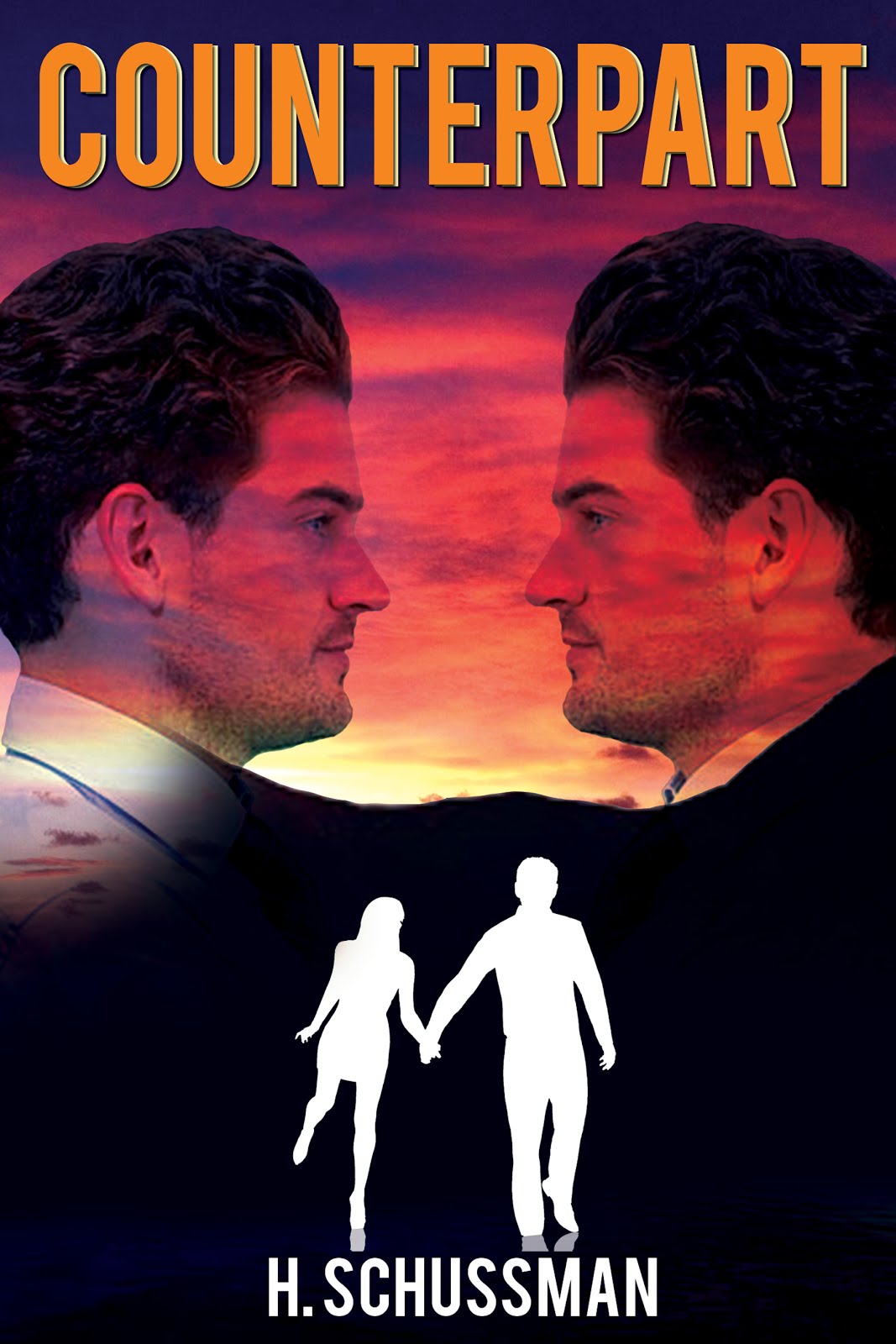
New Book Cover For Counterpart


My original book cover for Counterpart was very cool (I thought), but apparently it was a little outdated.


My audio voice-over artist, Jim Foster had an updated version made for me. Though it's good, it just never really resonated with me. Something about the shape of the guys face kinda turned me off.


Last week I decided to start from scratch... again. This time I turned to Pexels.com. This is a fabulous way to get free photos. Then I used Canva.com to create it, but it was too small, so I turned to Instasize.com to enlarge the pixilation. Finally, here's the end product.

Saturday, May 29, 2021

Heidi's Interview with Capital Fund


Capital Fund had a sweet deal the other day... They sent out an email with interview questions. Just copy and paste, answer the questions, and send a photo in case your interview gets selected for their website. I thought, hey, I can do that. I tapped out my responses and sent it off, and they picked it! I love free marketing, and Capital Fund is a good company. ;)

Check it out!

http://capitalfundscreenplaycompetition.com/h-schussman/

Sunday, January 31, 2021

El Tiburon Research


Heidi:
Pastor Marvin Garcia, thank you for joining us today. Since writing El Tiburon (published by Vinspire), I’ve given many book talks and am astounded with the interest in the plight of the Guarejos—the people-group living in the Guatemalan garbage dump. At the time of writing El Tiburon, there were 11,000 people living there… 6,000 of which were children. Since that time the Guatemalan government changed the boundaries of the dump to place the Guarejos on the outside of the dump. Now they go through an opening in the fence. In response to their questions, I would like to return to you, my main source of information. In El Tiburon, the Guarejos play an important role in keeping the main character alive.

I will preface this with an introduction to our readers as to how I know you. About ten-fifteen years ago our church asked if anyone could house a visiting youth pastor from Guatemala for 6 months. We offered our spare room and now we consider you to be a member of our family, along with your sister, Karina (who came and stayed with us later).

Pastor Marvin, you were born and raised in Guatemala. When did you become a pastor?

Marvin and Karina

Marvin
: Indeed, I was born in Guatemala City and all my life I have remained in the city. (I must confess I know very little about the rural area of Guatemala) Now I have tried to visit more of the rural area that definitely has beautiful places and views.

I was born in 1978 and when I was 9 years old I accepted Jesus into my heart in an American church (the pastor was an American named Charlotte Lindreng at Shekinah Church), I currently take the time to visit this church, every time I am there I feel I'm coming home. We were in this church for 6 years. Then we moved to another church closer to our home. When I was 20 years old, I was appointed youth pastor at the Iglesia Principe de Paz Central. We stayed there for 6 more years.


Then my dad received a call from God to open a church in the area we live in. And until today, Mission Maranatha has been an important part of our life. When I was 35 years old, I was appointed pastor at the Central American Theological Seminary in Guatemala. And I have spent 5 years pastoring a Ministry that together with my wife we form, called Ekklesia Guatemala.

Heidi: When did you first hear of the Guajeros at the Guatemala City garbage dump?

Marvin: When we are at Shekinah Church, they had an evangelistic program. Every December 23, they would give food baskets to each family that lived in the Garbage. Also, every day that Children's Day is celebrated, they had programs with piñatas, food, clothes and shoes for the children who lived there. I was probably 10 years old.

Marvin in California redwood forest

Heidi
: What was your reaction when you learned about their needs? Were you shocked or did you not fully understand at that time what their lives were like?

Marvin: For a 10 year old boy, it was very difficult to understand the needs they had. I had a good childhood (to call it that) we had our needs at home, but when I asked mom about food, food would magically appear on the table. (That's how I saw it. Today I know we have to work so that there is food at home).

And when it was my first time visiting these places, it was creating in me a perspective that my needs, although for me they were enormous... they had many more enormous needs. And after my first visit, throughout the next year, I remember saving 5 cents every day, in those days with 5 cents you could buy a soda and a cookie. But I kept every day, (although there were days when I was hungry and spent those 5 cents for myself) but I remember that at the end of that year, I gave my shepherds an envelope with a 20-quetzales bill. ($ 3 USD) and so a need grew in me to see the gospel of Jesus reach those places.


Heidi
: I know you’ve been involved in the ministry who helps the Guajeros… when did that start?

Marvin: When I was a youth pastor in the second church, one of the first projects was to create a program for the Guajeros. It was a difficult process because the churches were not knowledgeable in these areas of work. Since I was 10 years old, I had been gathering experiences that had marked my personal life and my ministerial life. And my wish was to transmit those emotions to others. Thank God the program that I founded, to this day continues to work for the Guajeros. Also to this day, I have been able to found 15 projects with different churches for the benefit of the Gaujeros. God has been good in every project and they are all working to this day.

Karina

Karina
: This is true, the ideas of my brother and a group of people provided projects that made it possible for the Guareros to have a job and they received God in their hearts.

Heidi: Have you ever been to see the community they live in? Is that community called La Limonada? Were you ever there when it was actually inside the dump?

Marvin: When I was working on projects for the Guajeros. within their community. I heard about another community called La Limonada. This community is in another area of Guatemala City, with a population of almost 3,000 families living in extreme poverty [60,00 people in a massive ravine]. At that time, I left people in charge of the main project we had and I began to visit this new community. At that time I had the possibility of arranging mission trips for American churches. And in both communities we were very blessed, new projects were created that continue to function to this day.

Karina: I was part of these projects together with my brother. It was my beginning to support him in the ministry. He met many missionary groups and it was the way to learn to speak English by translating, also I still have friends who continue to volunteer for the ministry of La Limonada.

Heidi: What is the community like? Give me good and bad examples of life for them.

Marvin: The city of the garbage is a community where garbage from all over Guatemala City arrives in trucks at all times. The smell is hard to get used to. Their life is literally about garbage, they eat, they sleep on other people's garbage. Although there are simple house projects for them, the common denominator is trash. An area of 5 hectares is used for garbage and for the families of the Guajeros.

Now, the La Limonada community is a garbage-free area, but it is a ravine, with a river of dirty waters at the bottom, and all around the ravine, small houses were built of cardboard, wood, and sheet metal. And it is an area where the gangs choose to live.


I believe that only a person with the passion of Jesus in his heart can see the bad in the community and turn it into an opportunity to bless. Good and bad experiences I have lived in each of the communities. But the passion for them makes you come back the next day, knowing that another experience will come. I remember that one day I was walking with boxes of medicine for the Guajeros, in an alley, a young man stole my cell phone and money that he had for my whole week. And when the Guajeros found out what happened, they got together and looked for this person who did not belong to the community, they found him and killed him. Then the community put together some money and a cell phone used for me. Crazy right?

Karina: It is a community that continues to need help, but the type of people that live around it is becoming very dangerous.

Heidi: Do you know anyone personally who lived/lives there?

Marvin: Yes, I have very good friends who live in both communities, people I trust who always have the opportunity to sit down and have a coffee and dream of new projects for the benefit of both communities

Karina: My brother still has communication and friendship with the Guajeros, they keep calling him and asking for prayer for their lives when they need it.


Heidi
: Do you have a special story about your work there that you’d like to share?

Marvin: I remember that with a missionary group we went to the La Limonada community and built a small house for an 80-year-old woman. At that time I had two jobs, I was as national director of the Festival with Luis Palau, a very important evangelistic event in Guatemala. One day before handing over that little house, I had a meeting with very important people in the local government. We went to a very expensive restaurant in the city of Guatemala. I remember ordering shrimp, (my favorite food) it was an incredible meal moment.

The next day we went to deliver the little house to Grandma. It had rained very hard the night before. We were wet, dirty, but with a smile on our faces from the old woman's expression. The impressive thing was that she in gratitude, took some corn tortillas, (I think they were there for more than 2 weeks) and took a pan, a small piece of butter and put the tortillas on the pan and moistened the tortillas with the butter, and he gave us 2 tortillas each, ... and said (thank you very much) for me they were the best tortillas that I had never eaten in my life. I enjoyed them so much that I am satisfied. The day before I was in a nice restaurant, the day after I was sitting on the wet floor of this old woman, and I remembered what the Apostle Paul said... In abundance and scarcity, I thank God.


Karina
: Yes, I remember that moment. I was working on Luis Palau's project as a secretary and my brother was on both projects. I was not present at the old lady's house but I did know about that moment.

Heidi: Did my writing a crime novel set in Guatemala and the dump have any impact on you?

Marvin and his wife, Evelyn
Marvin: I think there is no better place to set a crime novel than Guatemala. But I also believe that if through this novel we can present a little of the needs that exist in our country and create awareness in people…I think it will be worth it.

Karina: It is worth continuing with that passion, my country continues to present these problems and no one does anything for them.


Thursday, September 10, 2020

Save The Girls


What started out as a character-study of Sean McGee (the main dude in all of my political crime novels) turned into a novel... Why am I not surprised? I should've known better. He and Sport always take over my narrative. They're very strong characters and often surprise me, as Sean did in this book.


I wanted to explain what in his past had turned him into this noble and protective hero. I started with his enlisting in the Marine Corp, which led to his becoming Recon. He met Randy, Dan, and Craig in Recon. Dan was introduced in Counterpart just long enough to identify his body. In Save the girls, you get to meet him. These four young men go from boot-camp to special forces with the same intensity they pursue their respective careers in Secret Service and as a private bodyguard.


Sean decides to be become a Sacramento City Policeman. He loves it. He loves his training officer, Warrick. Remember that name? Janet Warrick--aka Sport... the woman who starts the series in Counterpart? This is her father.


Sean comes across the his first organized crime in his city--but the criminal lives outside of his jurisdiction. A prostitution ring run by a Russian named Boris. Sean doesn't like it. Boris can easily leave the city limits to the sprawling Greater Sacramento area and Sean can't follow. You all know Sean well enough to know that's not going to work for him. So he meets a guy named Becker (I won't spoil it for you if you haven't read Counterpart, but this is where he meets Sean).


Sean joins the CIA. No more city limits. He goes after Boris by stealing a prostitute. Boris is pissed. Sean is giddy with joy. He steals another one, this time a teen named Jazzy who looks just like the girl on the cover. Now Sean's obsession begins to shift from destroying Boris to saving the girls.

For paperback I'll send you over to Amazon.

Ebooks are available for any reader anywhere. An easy way to get it is through Smashwords.

Wednesday, April 10, 2019

Guest Post: K.S. Mitchell


This is an opportunity for readers to ask questions about our craft. Thanks fellow authors for helping me out! I know you are busy.

Musti asked: Do you pay someone to proofread your work?

Children and YA author, Kimberly Mitchell, responded to this question.
The short answer is no. I've always partnered with other writers in a critique group while I develop my books. Once I hit the stage where the book is ready for beta reading, I ask a few friends. My twin sister has been one of my best beta readers as well. During this process, most of the proofreading gets done. Then I'll do a final version before I send the book out and focus closely on grammar and sentence structure instead of the plot line, trusting that the earlier edits have ironed out the story.

However, I did hire a sensitivity reader to read through a middle grade novel that contains diverse characters. Since one of the characters is black, and I'm not, I wanted to be sure I wasn't falling into stereotypes or presenting the character in any way that might be offensive. I found the reader's feedback valuable and I was able to revise the character accordingly.

If I were to self-publish a book in the future instead of pursuing the more traditional route as I am now, I would definitely hire an editor before I released the book.

Sunday, March 10, 2019

How Do You Design a Book Cover?


My friend, John, asked me, “How do you design a book cover?”
Finally a technical question! There’s several different ways to go about it. I designed my first book on the Windows Art program. Honestly, it’s my favorite cover. Unfortunately I had to cave into business pressure and go with a photograph based cover… mainly because my second book had a photo cover.
Speaking of that, my publisher of El Tiburon was amazingly cool to have given me a great book cover. I’ll admit I asked them to stay with my design style, but no. So I had to approve their design, which meant saying no to several models because they didn’t look right.
Eventually I asked them to remove the models from the cover because it looked like a steamy romance (after about two years and multiple complaints from readers that the cover was misleading). Don’t get me wrong… El Tiburon has its romance, but steamy doesn’t quite fit the bill.
My first experience with making a professional quality cover was through a friend who used a Fiverr tech. We made Counterpart’s new cover. Again, I only had yay or nay power. I wanted to have control from the beginning.
For my recently published book, In the Crossfire of Revenge, I contracted with Fiverr all by myself. I felt so grown-up! :) I chose from their long list of book cover specialists based on reviews. I wanted one who allowed for multiple revisions. My lady was in Germany. We dialogued back and forth about how I wanted the cover to look. I was directed to an enormous photo bank to choose the photo I wanted (it took me about a week to decide). Then I sent it to her and she went to work. It took about six revisions until I was satisfied. I love the results… and it only cost me about $45 bucks! She gave me a cover in 3D, a thumbnail for eBook sites, and a square one for the audiobook, and the cover for the paperback.
Then I learned how to make it animated with glittering light using Glitterboo. I think it looks pretty cool on the cover I made for the McGee Series. That one I did using the phone app called Canva. My nephew took an artistic photo of his police gear for me to use. Canva is a great app.


Saturday, February 23, 2019

Did you write stories or books when you were a child as well?

Megan Pagan asked, “Did you write stories or books when you were a child as well?"
“I know you ask because you have little ones at home,” I commented.
“That’s what made me think of it. It’s so interesting to hear how some things stick with people since childhood or how people stumble into something they’re passionate about later in life. Also, Levi writes books all the time. It’s so cute.”
I’m going to answer this from two angles: Firstly, did I write as a child and secondly, how to be an encouragement to the little writers in your charge.
My beginnings as a story teller started with just that… story telling (some call this fibs). Plus, I was an avid reader from childhood and was encouraged to relate what I’d read to my family. We all loved ghost stories and would sit around the campfire (we camped a lot) telling goose bumpy tales. Even when I was little I was expected to tell a ghost story. My dad was a bit of a prankster, and loved to tell us tall tales just to see how much we’d believe. We would sit around for hours and tell jokes. To add to that environment, my mom had the nickname, “Little Miss Adjective.” She could describe things to death! It was never a simple cloud in the sky… it was a puff of dragon’s breath chasing a dream! Or some other equally extravagant description. A favorite game on road trips was Mad Lib. Have you ever played that? It’s a fun way to engage the whole family in silly creativity.
English classes were always my easy classes. I started a couple of really, really cheesy romance novels in high school. I’ve kept them for a good laugh. My college coursework required an English class so I took creative writing. My professor challenged me to clean up the cute little stories I wrote, and to get serious. He felt I had the potential to be a writer. I was going to college to become a physical therapist, not a writer. It turns out there’s a lot of writing going on in that career. I found I had a skill for documentation and Medicare rebuttals.
In the meantime I had an intense dream bordering on nightmare that woke me up from a dead sleep. I wrote down the dream and that was the first chapter of my first serious work of literature—Counterpart. It took a decade to write while going to college and then working, but I finally did it.
My recommendation to parents of any child who writes is to let them write. Don’t correct anything they write. Even if you’re an English teacher. Writing can be taught, but creatively expressing yourself cannot. It’s a natural instinct (I think in everyone) that should be allowed to develop young. If a child thinks their ideas are stupid, they will usually stop. Let their teachers teach them the rules later in life. If a child shows you something they wrote, my recommendation is to make a private moment and have them read it to you.
Listen with sincerity. Question things that don’t make sense graciously. They can become good when they’re twenty. I also think this teaches them to start writing projects without getting too hung up on how it should turn out. That’s paralyzing. There’s nothing wrong with being overly confident when they’re ten! Trust me when they go to publish their first book they will become humble.
Okay, I’m stepping down off my soapbox now :)

Wednesday, February 13, 2019

How do you select the names of your characters?

Debra Lewis and Kelly Spencer asked: How do you select the names of your characters?
Good question. It really depends on the character. I choose names based on personality, age, and nationality. For basic American characters, I just name them whatever seems right. I may (probably will) change my mind and go with a different name before I publish it. I may feel I have too many people with names starting in M. Or the names are too similar in cadence, such as Harry, Larry, and Gary. That can be confusing to a reader. So I’ll go back and change Harry to Hank. It still fits the age group and style of the name, but sounds different.
Sometimes the character just has a name. When I change the name for my reasons I feel guilty. For example in The Crossfire of Revenge the youth pastor’s name is Pastor Tim. Period. That’s his name. I know this guy in real life. When I’d completely finished the book, I changed his name from Tim to Tom. Mainly because I didn’t want people to think it was a true story about Tim… though he was the inspiration behind the character.
If it’s a really important character with a major role (especially an evil role), or a deceptive character, I’ll refer to Character Naming Sourcebook by Sherrilyn Kenyon. This gives a breakdown of names by country of origin and what the name means. For a character who will seem good but is actually evil, I’ll choose a name meaning “trustworthy” or “noble.” If the character is immediately evil and remains so, I’ll choose a name meaning “dark” or “deceptive.” Sometimes it will be based on modern perceptions, such as Adolph, or Damien, which are both considered dark names. Sadly, Adolph is actually a cool name meaning “noble wolf,” and Damien means “untamed.”
Otherwise I just surf the web, especially if I’m looking for a teen name of let’s say an Italian girl: Sofia, Emma, Chiara, Aurora…. Or maybe I’m looking for a cool upbeat name for a teen boy? I’ll search teen movie stars: Keegan, Skylar, Jake, Penn…. 
There’s lots of different ways to choose a name, but each name is important. As I said earlier, I may change a character’s name a couple of times. My name for example has very specific meanings. Heidi means “female warrior,” Schussman means “sharp shooter” (it was the ancient title for the dude who sat up in the turret and shot arrows down at the bad guys trying to invade his master’s castle), and Gilbert means “shield.” So I’m a female warrior, sharp shooter, with a shield! Hmmm… now maybe you understand why I write espionage :)

Monday, January 28, 2019

Where do you write?

Debbie Bailey asked; Where is your favorite place to sit back and write?
The short answer; wherever I can find the right ergonomics. I usually like to sit bolt upright with my laptop on the surface in front of me. Sometimes I slouch way back in a lawn chair and prop my laptop on my... lap. Another option for me is to stand at a counter, or I place my laptop on an up-ended box on the table.
Most of my effective writing is done at a local Marriott Hotel Starbucks. I can sit for hours and be stimulated by the constant parade of people but never get interrupted by a friend. It’s just noisy enough to be white noise. If it’s absolutely quiet, I can be productive. The only time I cannot write is if there’s someone near me and I can hear everything they’re saying… I’m a compulsive eavesdropper! Trust me, if I can hear you, I’m listening to your conversation.
However, I’m not always home. I write a travel blog (Dashing Bold Adventure), so I write all over the world. Wherever I am, I make it work. In the old days I would find an internet cafe and pay for 30 minutes on their computer. That's when I developed speed! It would always take a few minutes to figure out the keyboard. Not every keyboard is a QWERTY. 
The Spanish speaking countries have the ñ on their board. Then to add to the fun the keys are often so worn out, you can’t read them :)
When we're abroad for months at a time, I find some spot that works for me... The terrace on the hotel roof in Puerto Escondido, the open bar at Columbus Isle/Club Med, an adorable cafe in Florence, the covered porch of our bungalow overlooking Lake Atitlan, a coffee shop in Guanajauto MX, etc… What I write varies depending on the amount of time I’m going to be in one place. I don’t do well with my novels if we’re on the move a lot.